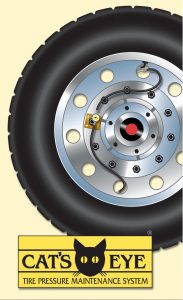
Cat’s Eye Tire Pressure Maintenance System
SAVE GAS! Easily see low tire pressure your dual tire! Complete Dual Tire Pressure Equalization Systems shipped directly to you. Great for Motorhome, Pickup, Semi Tractor and Semi Trailer Dual Tires.
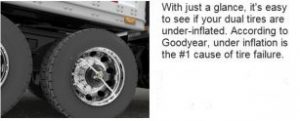
 With just a glance, dual tire pressures can be checked on efficient walk-arounds with the Cat’s Eye tire pressure inflation system. This dual tire pressure equalization system works well to reduce tire wear and save fuel costs.
The Cat’s Eye makes it easy to see if your tires are underinflated. This system attaches to the dual’s hub or lug bolt and allows air transfer from one tire to the other. Its single airing point fills both tires at once, making the job quick, clean and easy. With just a glance, you’ll instantly see changes in tire pressure.
The bright yellow “eye” of the Cat’s Eye, opens up slightly if dual tire pressure falls 10-15% below the recommended pressure setting. If corrective action is not taken, the “eye” will open up completely, activating the internal check valve. The internal check valve will prevent the good tire from going flat in the case of a tire blowout or a broken pressure hose.
Cat’s Eye is available with rubber or stainless steel hoses in lengths of 12” (17.5 tires or less and Super Single Tires), 14″ (19.5 tires) or standard 16″ (22.5 and 24.5 tires).
Are you willing to bet your profits that your inside duals are not under inflated? Underinflation is the single most costly element of tire maintenance. Even small pressure losses are not only costly–they can prove dangerous, playing havoc with schedules, profits, and safety. Underinflated tires cause unnecessary heat to prematurely damage tire casings, eat away tire tread and increase rolling resistance. The penalty is high–higher fuel bills, less miles per tire, inability to retread casing and sometimes missed deadlines. As costly as that is, most drivers are not prepared to baby sit the pressure in those tires. It is a dirty, time consuming task. Drivers need a reliable way to be aware of low tire pressures in a cost effective manner.
Stop wheel hop and vibrations on hub piloted wheels! Wheel Centering Products. You can also add a Tire Pressure System with the Cat Eye kits! See the pressure of your tires from inside your cab or truck! TST Tire Pressure Monitoring System
How do they work?
Cat’s Eye tire monitor makes it easy to see if your dual tires are under inflated. This system attaches to the dual’s hub or lug bolt and allows air transfer from one tire to the other. Its single airing point fills both tires at once, making the job quick, clean and easy. With just a glance, you’ll instantly see changes in tire pressure. When the “eye” is completely closed, the tires are within 2% of recommended pressure and are equalized As the “eye” begins to open, the pressure has dropped 5-6%, a sign of a slow leak. When the “eye” is completely open, the pressure has dropped 10% under the recommended pressure and needs immediate attention. At this point, the internal check valve is activated, isolating the good tire from additional pressure loss. The Cat’s Eye internal check valve prevents both tires from going flat in the event one tire develops a leak, blows out or when one of the pressure.
Simple Steps to Install
Installing the gauge is a quick and easy process. The new seal will stand up to sharp valve stem edges and repeated installations. Cat’s Eye comes with wheel and hub mounting brackets Position valve stems 180° across from each other
Make sure they are clean and in good operating condition. Attach the Cat’s Eye gauge to the wheel or hub with the appropriate mounting bracket Finger tighten hose ends, inside tire first, until you hear the seals take hold.
Give each fitting an extra 1/2 turn to ensure a tight seal. Then bubble test. (See the complete installation instructions when installing Cat’s Eye.)
Advantage of Equalized Tire Pressure – If the pressure in your duals is not the same, the diameter of the tires will not be equal. Since duals are bolted together, the smaller tire is going to be dragged by the larger tire.
Case Study by Bridgestone:
When the inside tire has a mere 5 psi less than the outer tire:
Findings:
1. The diameter of the inner tire is 5/16” less than the outer tire.
2. With a 5/16” difference in diameters, the outer tire will cause the inner tire to drag 13′ per mile.
3. In just 35,000 miles, the tread of the smaller tire will have been scuffed off for 86 miles.
4. The added resistance makes BOTH tires wear faster. If the pressure difference is greater, so is the damage. The easiest way to insure that both tires are equal size, is to equalize the pressure.
Tire manufacturers estimate a loss of $177 per year due to treadwear and fuel costs for each tire running 30% underinflated.
SELECTION / ORDERING GUIDE
The Cat’s Eye (tire pressure maintenance system) is available in packages of 2 or 4, rubber or stainless steel hoses and in 12″, 14″ and 16″ lengths. Click part number to order online. Note – will not work with wheel simulators.
16″ Hoses – used normally on 22.5 and 24.5 tires
14″ Hoses – used normally on 19.5 tires
12″ Hoses – used normally on 17.5 dual tires or Super Single Tires
CLICK PART NUMBER TO ORDER ONLINE